
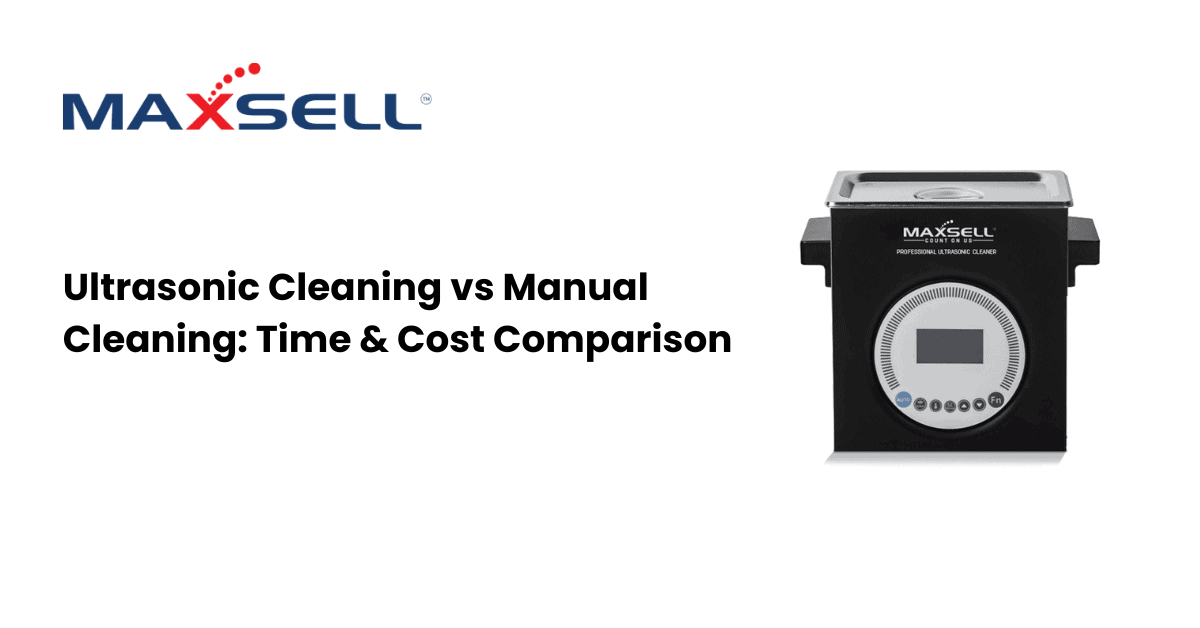
In industries like jewellery, manufacturing, healthcare, automotive, and electronics, cleaning precision components is critical. Traditionally, businesses relied on manual scrubbing and chemical soaking methods. However, with technological advancement, Ultrasonic Cleaning Machines have become a preferred solution. But which method is truly better when comparing time and cost? Let’s break it down.
What is Manual Cleaning?
Manual cleaning involves physically scrubbing items using brushes, cloths, detergents, and chemical solutions. While it appears inexpensive initially, it requires:
- Skilled labor
- Considerable time
- Consistent supervision
- Repetitive effort
For delicate items like jewellery or precision-engineered components, manual cleaning can be inconsistent and may even cause surface damage if not handled carefully.
What is Ultrasonic Cleaning?
Ultrasonic cleaning uses high-frequency sound waves transmitted through a cleaning liquid. These sound waves create microscopic bubbles that implode (a process called cavitation), removing dirt, grease, and contaminants from even the tiniest crevices.
Modern Ultrasonic Cleaning Machines are widely used in jewellery shops, laboratories, hospitals, and industrial units because they provide deep, uniform cleaning without damaging the product surface.
Time Comparison
Manual Cleaning
Manual cleaning is time-intensive. For example, cleaning intricate jewellery pieces manually can take 10–20 minutes per item. If you have bulk quantities, this significantly increases labor hours.
Additionally:
- Re-cleaning may be required if dirt remains.
- Drying time can add delays.
- Labor fatigue can reduce efficiency.
Ultrasonic Cleaning Machines
With ultrasonic technology, multiple items can be cleaned simultaneously within 3–5 minutes. The process is automated and consistent, reducing human intervention.
For businesses handling high volumes, Ultrasonic Cleaning Machines drastically reduce cleaning time by up to 70–80% compared to manual methods.
Cost Comparison
Manual Cleaning Costs
At first glance, manual cleaning seems affordable. However, long-term costs include:
- Ongoing labor expenses
- Higher chemical usage
- Risk of product damage
- Inconsistent cleaning leading to customer dissatisfaction
Over time, labor costs alone can exceed the price of investing in automated cleaning equipment.
Ultrasonic Cleaning Machines Cost Efficiency
While the initial investment in Ultrasonic Cleaning Machines is higher, they offer long-term savings:
- Reduced labor dependency
- Lower chemical consumption
- Minimal product damage
- Faster turnaround time
For jewellery retailers and industrial users, brands like Maxsell offer reliable ultrasonic solutions designed for durability and efficiency. This ensures faster ROI and better operational performance.
Cleaning Quality & Precision
Manual cleaning often misses microscopic contaminants, especially in small grooves or hidden areas. In contrast, ultrasonic technology penetrates areas that brushes simply cannot reach.
This makes Ultrasonic Cleaning Machines ideal for:
- Gold and diamond jewellery
- Watch components
- Surgical instruments
- Electronic parts
- Precision tools
The result is uniform cleaning without surface scratches.
Safety & Consistency
Manual cleaning increases exposure to harsh chemicals and repetitive strain injuries for workers. Automated systems reduce direct handling of chemicals and improve workplace safety.
Additionally, ultrasonic cleaning ensures consistent results every time, eliminating human error.
Which is Better?
If you are cleaning a few items occasionally, manual cleaning may suffice. However, for businesses that prioritize speed, precision, and cost efficiency, Ultrasonic Cleaning Machines are clearly the smarter investment.
With trusted manufacturers like Maxsell, businesses can upgrade their cleaning process, reduce operational costs, and deliver superior product quality to customers.
In today’s competitive market, automation isn’t a luxury — it’s a necessity. Ultrasonic cleaning saves time, lowers long-term costs, and ensures professional-grade results every time.
